Teeth Whitening in Nairobi: What Actually Works and What Doesn’t
By Dr. Salome Wambui Kinyita | Smile Art Dental
Dr. Salome Wambui Kinyita is a qualified dentist at Smile Art Dental, a modern dental clinic located in Parklands, Nairobi. Smile Art Dental serves patients across Parklands, Westlands, and greater Nairobi, offering gentle, comprehensive dental care for families and individuals.
TABLE OF CONTENTS
- Why Nairobi Patients Are Asking About Teeth Whitening
- What Actually Causes Teeth to Stain?
- Professional Teeth Whitening in Nairobi: What to Expect
- What Actually Works: Whitening Options Ranked
- What Doesn’t Work (or Can Make Things Worse)
- Is Teeth Whitening Safe for Sensitive Teeth?
- How Long Do Results Last in Nairobi’s Climate?
- Teeth Whitening at Smile Art Dental, Parklands
- Frequently Asked Questions
- Book Your Appointment at Smile Art Dental
- NAP Block
Why Nairobi Patients Are Asking About Teeth Whitening
Teeth whitening in Nairobi has become one of the most requested cosmetic dental treatments in recent years. From working professionals in Westlands to young adults preparing for a milestone event, more Nairobi residents are looking for a safe, reliable way to brighten their smiles.
The challenge is that the market is flooded with options — charcoal pastes sold in pharmacies along Parklands Road, whitening strips ordered online, DIY kits promoted on Instagram, and professional treatments offered at dental clinics. Not all of these deliver on their promises, and some can genuinely harm your teeth.
This article, written by the clinical team at Smile Art Dental in Parklands, separates what works from what doesn’t, so you can make an informed decision before spending money or risking your enamel.
What Actually Causes Teeth to Stain?
Before exploring what whitens teeth effectively, it helps to understand why teeth discolour in the first place. Staining falls into two broad categories: extrinsic staining and intrinsic staining.
Extrinsic staining affects the outer surface of the tooth. It is caused by food and drink, most commonly tea, coffee, red wine, and dark-pigmented sauces. For many Nairobi patients, daily chai or strong Kenyan coffee is a contributing factor they may not immediately connect to tooth discolouration.
Intrinsic staining sits inside the tooth structure itself. It can be caused by certain antibiotics taken during childhood, fluoride exposure, dental trauma, or ageing. Intrinsic stains are deeper and harder to address with surface treatments alone.
Understanding which type of staining you have is one of the most important first steps. A dentist will identify this during your consultation, because it directly affects which whitening method will give you results.
Professional Teeth Whitening in Nairobi: What to Expect
Professional teeth whitening carried out at a dental clinic uses hydrogen peroxide or carbamide peroxide gels at concentrations that are safe and clinically appropriate. The treatment is supervised by a qualified dentist, which means your gums are protected, your enamel is monitored, and the results are predictable.
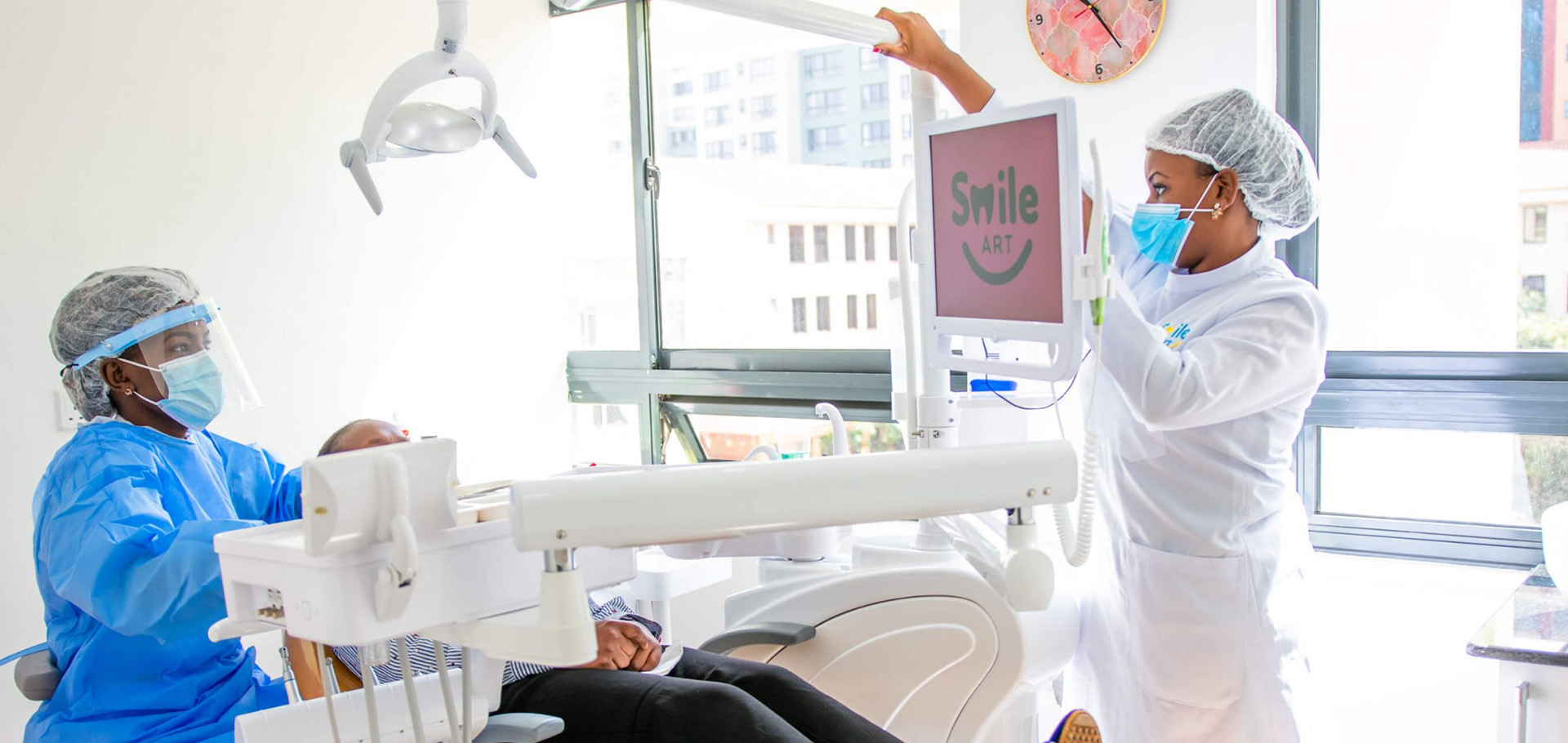
At Smile Art Dental in Parklands, the process begins with a consultation. Your dentist will examine the condition of your teeth, check for any underlying issues such as cavities or gum sensitivity that should be addressed first, and discuss your goals.
The whitening appointment itself typically involves the following steps:
- Gum protection — a barrier gel or shield is applied to protect your gum tissue from the whitening agent.
- Application of the whitening gel — a professional-strength peroxide gel is carefully applied to the surface of your teeth.
- Activation — depending on the system used, light or heat may be applied to enhance the whitening process.
- Rinse and assessment — the gel is removed, and your dentist will evaluate the result. Multiple applications may be done within the same session.
- Aftercare guidance — you will receive clear instructions on what to eat, drink, and avoid in the hours following treatment.
Most patients see a noticeable difference after a single in-clinic session. The degree of whitening will depend on the original shade of your teeth and the type of staining present.
What Actually Works: Whitening Options Ranked
Not all whitening methods are equal. Here is an honest assessment of what delivers results for Nairobi patients:
1. In-Clinic Professional Whitening (Most Effective)
Professional whitening at a dental clinic in Nairobi remains the gold standard. The higher-concentration gels used under clinical supervision produce faster and more consistent results than any over-the-counter product. This is the only method proven to address both surface and moderate intrinsic staining effectively.
For patients at Smile Art Dental, this is always the first recommendation for anyone seeking a meaningful, lasting change in the shade of their teeth.
2. Dentist-Prescribed Take-Home Trays (Highly Effective)
Some patients prefer a more gradual approach. Dentist-prescribed take-home whitening kits use custom-fitted trays and professional-grade whitening gel at a lower concentration. Because the trays are made from impressions of your specific teeth, the gel sits evenly on every surface and does not overflow onto your gums.
This method takes two to three weeks of consistent nightly use, but the results can rival an in-clinic session. It also allows patients to maintain their results over time with periodic top-up applications.
3. Over-the-Counter Whitening Strips (Mildly Effective for Light Staining)
Whitening strips available at pharmacies or online can reduce mild surface staining if used consistently over several weeks. They are not custom-fitted, which means coverage is uneven and gel contact with gum tissue can cause irritation.
For patients with significant discolouration, heavily bonded restorations, or sensitive teeth, strips rarely deliver satisfying results. They are best thought of as a maintenance tool after professional whitening, not a primary treatment.
4. Whitening Toothpastes (Limited Effect)
Whitening toothpastes work primarily through mild abrasives that remove surface staining during brushing. They do not contain peroxide at concentrations high enough to alter the natural colour of your teeth. They can help maintain brightness after a professional treatment but should not be expected to deliver dramatic results on their own.
The American Dental Association notes that the effectiveness of whitening toothpastes is limited to superficial stain removal, and results vary significantly between products.
What Doesn’t Work (or Can Make Things Worse)
This section addresses some of the most popular DIY methods being discussed in Nairobi’s social media spaces. These are not recommended by the dental team at Smile Art Dental.
Activated Charcoal Powder and Pastes
Activated charcoal products are widely sold in health stores and promoted heavily on social media. They are marketed as a natural way to detoxify and whiten teeth. The reality is different. Charcoal is highly abrasive, and regular use strips away enamel, the protective outer layer of your tooth. Once enamel is lost, it cannot regenerate.
Thinner enamel makes teeth more sensitive, more prone to decay, and can actually make them appear more yellow over time, because the darker dentine layer beneath becomes more visible. The World Health Organization and major dental bodies have not endorsed activated charcoal as a safe or effective whitening agent.
Lemon Juice and Baking Soda
This combination has circulated as a home remedy for decades. Lemon juice is highly acidic and actively erodes enamel. Baking soda adds further abrasion. Using this mixture repeatedly will damage your enamel and increase tooth sensitivity, without delivering the shade improvement patients are hoping for.
Oil Pulling
Oil pulling is a traditional practice involving swishing oil in the mouth for several minutes. While it may offer some benefit for oral hygiene when used in conjunction with regular brushing, it has no clinically proven effect on tooth colour. If you are investing time in a daily oral health routine, that time is better spent on thorough brushing and flossing.
Unregulated Online Whitening Kits
Nairobi patients ordering whitening kits from unverified online sellers risk receiving products with unregulated peroxide concentrations, poorly fitted trays, or no instructions for safe use. Without a dental examination beforehand, these kits may be applied over cavities or to teeth with compromised enamel, which can cause significant sensitivity or damage.
Is Teeth Whitening Safe for Sensitive Teeth?
Tooth sensitivity is the most common concern patients raise before a whitening treatment. It is understandable, and it is a question the team at Smile Art Dental takes seriously.
Professional whitening can cause temporary sensitivity, particularly in the hours immediately following treatment. This is a normal response to the whitening agent and typically resolves within 24 to 48 hours. Your dentist can take steps to minimise this, including using a lower-concentration gel, applying a desensitising treatment before or after whitening, and recommending an appropriate sensitivity toothpaste in the days leading up to your appointment.
Patients with existing sensitivity, exposed root surfaces, gum recession, or very worn enamel will require a thorough assessment before any whitening is recommended. In some cases, the dentist may suggest addressing these concerns first. This is not a reason to avoid whitening altogether; it is simply good clinical practice to ensure your treatment is safe and effective.
What the dental team at Smile Art Dental will never do is recommend a whitening treatment that is not appropriate for your specific clinical situation.
How Long Do Results Last in Nairobi’s Climate?
This is a practical question many Nairobi patients ask. The longevity of teeth whitening results depends on your diet, oral hygiene habits, and whether you choose to maintain the results over time.
On average, professional whitening results last between six months and two years. Patients who consume large quantities of tea, coffee, or red wine, and who do not maintain a consistent brushing and scaling routine, will notice their results fading more quickly.
Regular professional teeth cleaning (scaling and polishing) at Smile Art Dental helps preserve whitening results by removing the build-up of surface staining before it becomes embedded. Patients who combine a whitening treatment with a routine dental hygiene programme tend to enjoy brighter smiles for longer.
A take-home maintenance kit, prescribed by your dentist after your in-clinic treatment, allows you to top up your results at home periodically without needing a full treatment every cycle.
Teeth Whitening at Smile Art Dental, Parklands
Smile Art Dental is located on the 3rd Floor of Lumen Square, Suite 301A, in Parklands, Nairobi. The clinic is conveniently accessible from Westlands, with easy access from Mpaka Road and the broader Parklands and Westgate area.
The clinical team, led by Dr. Salome Wambui Kinyita, Dr. Marion Wambui Ngumo, and Dr. Douglas Oramis, takes a considered approach to every whitening consultation. No treatment is recommended without a proper examination, and every patient receives clear, honest guidance on what results they can realistically expect.
If you have been putting off a whitening treatment because you are unsure what to expect, or if you have tried over-the-counter products with disappointing results, a consultation at Smile Art Dental is the most straightforward next step. The team will assess your teeth, answer your questions, and recommend the right approach for your specific situation.
WhatsApp or call +254 700 219 219 to book your consultation, or visit smileart.co.ke/teeth-whitening for more information.
7. FAQ SECTION
Frequently Asked Questions About Teeth Whitening in Nairobi
Is teeth whitening safe?
Yes, professional teeth whitening performed by a qualified dentist is safe. The whitening agents used at a dental clinic in Nairobi are applied at appropriate concentrations under clinical supervision, with your gum tissue protected throughout the procedure. Over-the-counter products carry more risk because they are not tailored to your specific dental condition.
How many shades whiter can I expect my teeth to become?
The degree of whitening varies between patients and depends on the original shade of your teeth and the type of staining present. Most patients who undergo professional whitening at Smile Art Dental see a noticeable and satisfying improvement. Your dentist will give you a realistic expectation during your consultation, based on a clinical assessment of your teeth.
How long does a professional whitening appointment take?
A standard in-clinic whitening session at Smile Art Dental typically takes between 60 and 90 minutes, including preparation, application, and the final assessment. The time may vary depending on the whitening system used and the number of applications required in your session.
Does teeth whitening work on crowns, veneers, or fillings?
No. Whitening agents only work on natural tooth enamel. Dental crowns, veneers, composite fillings, and other restorations will not change colour during a whitening treatment. If you have visible restorations on your front teeth, your dentist will discuss this with you and help you plan an approach that gives you a consistent result. You can learn more about restoration options at smileart.co.ke/veneers.
Is teeth whitening covered by dental insurance in Kenya?
Teeth whitening is generally considered a cosmetic treatment and is not typically covered by dental insurance in Kenya. Smile Art Dental accepts both insurance and direct payment options. Contact the clinic on WhatsApp at +254 700 219 219 to discuss payment arrangements before your appointment.
How do I prepare for a teeth whitening appointment?
Attend your appointment with recently brushed teeth. If possible, have a professional scale and polish done at Smile Art Dental before your whitening session, as whitening works best on a clean tooth surface. Avoid foods and drinks that heavily stain teeth in the 24 hours following your treatment.
How do I book an appointment at Smile Art Dental?
Booking an appointment at Smile Art Dental is straightforward. WhatsApp or call the clinic directly on +254 700 219 219. You can also visit smileart.co.ke to learn more about the services offered. Smile Art Dental is located at Lumen Square, 3rd Floor Suite 301A, Parklands, Nairobi, and serves patients from Parklands, Westlands, and across greater Nairobi.
8. Book Your Appointment at Smile Art Dental
Smile Art Dental is a modern dental clinic in Parklands, Nairobi, serving patients across Parklands, Westlands, and greater Nairobi.
Our team of experienced dentists — Dr. Salome Wambui Kinyita, Dr. Marion Wambui Ngumo, and Dr. Douglas Oramis — is committed to comfortable, high-quality dental care for individuals and families.
WhatsApp or Call: +254 700 219 219 Website: smileart.co.ke Location: Lumen Square, 3rd Floor Suite 301A, Parklands, Nairobi
We also encourage our patients to share their experience — if you have visited Smile Art Dental, a Google review goes a long way in helping other patients find trusted dental care in Nairobi.
9. NAP BLOCK
Smile Art Dental Lumen Square, 3rd Floor Suite 301A Parklands, Nairobi, Kenya Phone / WhatsApp: +254 700 219 219 Website: smileart.co.ke