
What Is a Dental Filling?
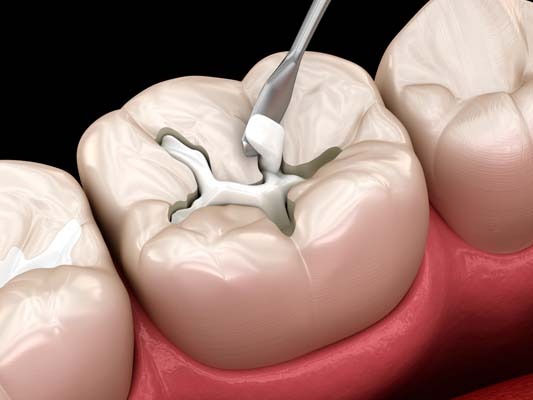
A dental filling is a restorative procedure used to repair a tooth that has been damaged by decay, erosion, or a minor fracture. After removing the decayed or damaged tissue, the tooth is restored to its natural shape, function, and — with modern tooth-coloured composite resin — its natural appearance too.
At Smile Art Dental, we predominantly use composite resin (white/tooth-coloured) fillings, which bond directly to the tooth structure and require minimal removal of healthy tooth tissue. Unlike traditional amalgam (silver) fillings, composite fillings are virtually invisible, mercury-free, and provide excellent strength for all but the most heavily loaded back teeth.
Getting a filling is one of the most common dental procedures and is completed comfortably in a single appointment. Early intervention is key — a small filling today prevents a large, expensive filling or crown tomorrow. Don’t wait for dental pain; regular check-ups catch decay early when treatment is simplest.
Choosing the Right Filling Material
Composite Resin
Tooth-coloured, mercury-free, bonds directly to tooth. Excellent aesthetics. Ideal for all visible teeth and many back teeth.
Dental Amalgam
Silver-coloured, highly durable. Long-established material for heavily loaded back teeth. Very cost-effective and long-lasting.
Glass Ionomer
Tooth-coloured, releases fluoride. Ideal for small cavities near the gum line and children's teeth. Excellent biocompatibility.
Why Fill Early
Benefits of Professional Dental Fillings
Early, high-quality fillings protect your teeth, preserve your smile, and prevent far more complex and costly treatments down the line.
Natural Tooth Appearance
Our composite resin fillings are shade-matched with precision to your exact tooth colour, creating a seamless, completely natural-looking restoration. Nobody will know you have a filling — not even you, most of the time.
Durable and Long-Lasting
Modern composite fillings bond chemically to tooth structure, providing exceptional strength and durability. With proper care, composite fillings last 7–15 years. Amalgam fillings can last even longer with their inherent robustness.
Mercury-Free Options
For patients concerned about amalgam, we offer completely mercury-free composite and glass ionomer alternatives that deliver excellent performance with none of the aesthetic or material concerns associated with silver fillings.
Minimal Tooth Removal
Composite resin bonds directly to tooth structure, allowing our dentists to preserve significantly more healthy tooth tissue compared to amalgam. Less drilling means a stronger, more intact tooth for the long term.
Quick, Same-Day Procedure
Most fillings are completed comfortably in a single appointment of 30–60 minutes. You'll walk in with a cavity and walk out with a fully restored tooth, ready to eat and function normally on the same day.
Prevents Further Decay
A filling seals off the decayed area, preventing bacteria from penetrating deeper towards the nerve. Treating decay early with a simple filling avoids the need for more complex root canal treatment or crown in the future.
The Process
Your Dental Filling Step by Step
A straightforward, comfortable procedure that restores your tooth fully in a single visit — from diagnosis to polishing.
Examination & X-Ray
Your dentist examines your teeth visually and with a probe, and takes a targeted digital X-ray where needed to confirm the extent of decay and check whether it is approaching the pulp. Early detection leads to the simplest, most conservative treatment.
Local Anaesthesia
For all but the smallest, shallowest cavities, local anaesthetic is administered to ensure you feel no pain during the procedure. Our gentle technique and fine-gauge needles make the injection as comfortable as possible.
Complete Decay Removal
Using a dental handpiece and specialised hand instruments, all decayed tooth material is carefully and completely removed. We use caries detection tools to confirm that every trace of infected dentine has been eliminated before placing the filling.
Tooth Preparation & Bonding
For composite fillings, the tooth surface is cleaned, etched with a mild acid to create a bonding surface, and a liquid bonding agent is applied and light-cured. This creates the chemical adhesion that makes composite fillings so strong and durable.
Filling Placement & Shaping
The composite resin is applied in thin layers, each hardened with a special curing light. Your dentist sculpts the filling to match the natural contours and anatomy of your tooth — recreating cusps, grooves, and contact points with precision.
Bite Check, Finishing & Polishing
You'll bite on articulating paper to check that the filling meets your opposing teeth correctly. Any high spots are adjusted, and the filling is polished to a smooth, natural lustre — indistinguishable from surrounding enamel.
Frequently Asked Questions
Everything you need to know about dental fillings at Smile Art Dental, Nairobi.
The longevity of a filling depends on the material used, the size of the restoration, the tooth’s position, and your oral hygiene habits. Composite resin fillings typically last 7–15 years. Amalgam fillings can last 15–25 years or longer. Glass ionomer fillings, used for smaller restorations, last 5–10 years. All fillings will eventually need replacement — your dentist monitors them at regular check-ups and will advise when replacement is needed before the filling fails.
Modern composite resin has advanced enormously and provides excellent strength for the vast majority of fillings. For smaller to medium-sized cavities on all teeth, composite performs comparably to amalgam. For very large fillings on heavily loaded back teeth, amalgam may offer marginally greater durability — our dentists will advise if this applies to your specific case. The aesthetic advantage of composite is significant, and most patients prefer it wholeheartedly for all positions in the mouth.
No — the procedure is performed under local anaesthesia and should be completely pain-free. You will feel pressure and vibration but no sharp pain. For very small, shallow cavities, some dentists may be able to place a filling without anaesthesia entirely, but we always offer it for your comfort. After the anaesthetic wears off, you may feel mild sensitivity or soreness for 1–3 days — this is normal and resolves quickly. Persistent sensitivity after that warrants a follow-up assessment.
Many cavities cause no symptoms at all in their early stages — this is why regular dental check-ups are so important. When decay progresses, symptoms can include: sensitivity to cold, heat, or sweet foods; a toothache when biting; a visible dark spot or hole in the tooth; or a rough edge you notice with your tongue. If you experience any of these, book an appointment promptly. The earlier decay is detected and treated, the simpler (and less expensive) the treatment required.
For composite resin fillings, which are hardened (cured) with a light during placement, you can eat as soon as the anaesthetic wears off — typically 1–2 hours after the appointment. We recommend avoiding very hard or sticky foods on the filled tooth for 24 hours as a precaution. For amalgam fillings, which harden over time, it’s best to avoid chewing on that side for at least 24 hours. Your dentist will give you specific post-filling instructions at your appointment.